Contact Us
Error: Contact form not found.
Contact Us
Error: Contact form not found.
Client Login
Select a platform below to log in

Ransomware attacks continue to be one of the greatest threats to data security and business operations, causing extended interruptions, data loss, and reputational harm. Ransomware can be introduced into your environment from a variety of attack vectors – phishing emails, vulnerability exploits, misconfigured systems, and more. With a ransomware assessment, you can get an in-depth review of your organizational preparedness against ransomware attacks.

Our analysts analyze your IT infrastructure, focusing on the controls in place for ransomware preparedness.

Make sure your backups are properly configured in the event that systems are locked down by ransomware.

We’ll help identify missing controls and configuration changes to make you more resilient against ransomware.

Our analysts perform manual testing to test how well ransomware-based controls perform in action.
Our information security analysts request supporting documentation and artifacts related to your implemented ransomware controls. This includes things like completed risk assessments, internal policies, configuration screenshots, and incident response plans.
Through interviews with your staff, we discuss the implementation status of controls with a focus on how they help protect you from ransomware. The analysis is designed to provide an administrative and technical understanding of your infrastructure and personnel.
Open ports and services can introduce entry points for ransomware into your networks and systems. These could be things like TCP/UDP ports, web services, email servers, and more.
During external network testing, we run network scans to identify areas in your environment that might be susceptible to the introduction of ransomware. For any found vulnerabilities, we then perform manual testing to see how insecure those areas actually are.
The most successful avenue for ransomware deployment is through phishing emails – users clicking links, opening attachments, or responding to malicious domains. Your organization has perimeter controls in place to keep known ransomware threats from reaching your inbox, like firewalls, spam filters, and domain exclusions.
Without whitelisting, we send phishing emails to see how well your external defenses perform against them. Best case scenario, the emails are caught by your perimeter defenses and never make it to your users’ inboxes. If we see anything slip through the cracks, we’ll provide security configuration recommendations to harden your external controls.
The results of the controls assessment and perimeter testing are compiled into a comprehensive report with any findings prioritized based on vulnerability severity. Using our recommendations, your organization can improve its ability to prevent, detect, respond to, and recover from a ransomware attack.
The cloud-based software-as-a-service (SaaS) company CDK Global who provides services to car dealerships was targeted in a ransomware attack.
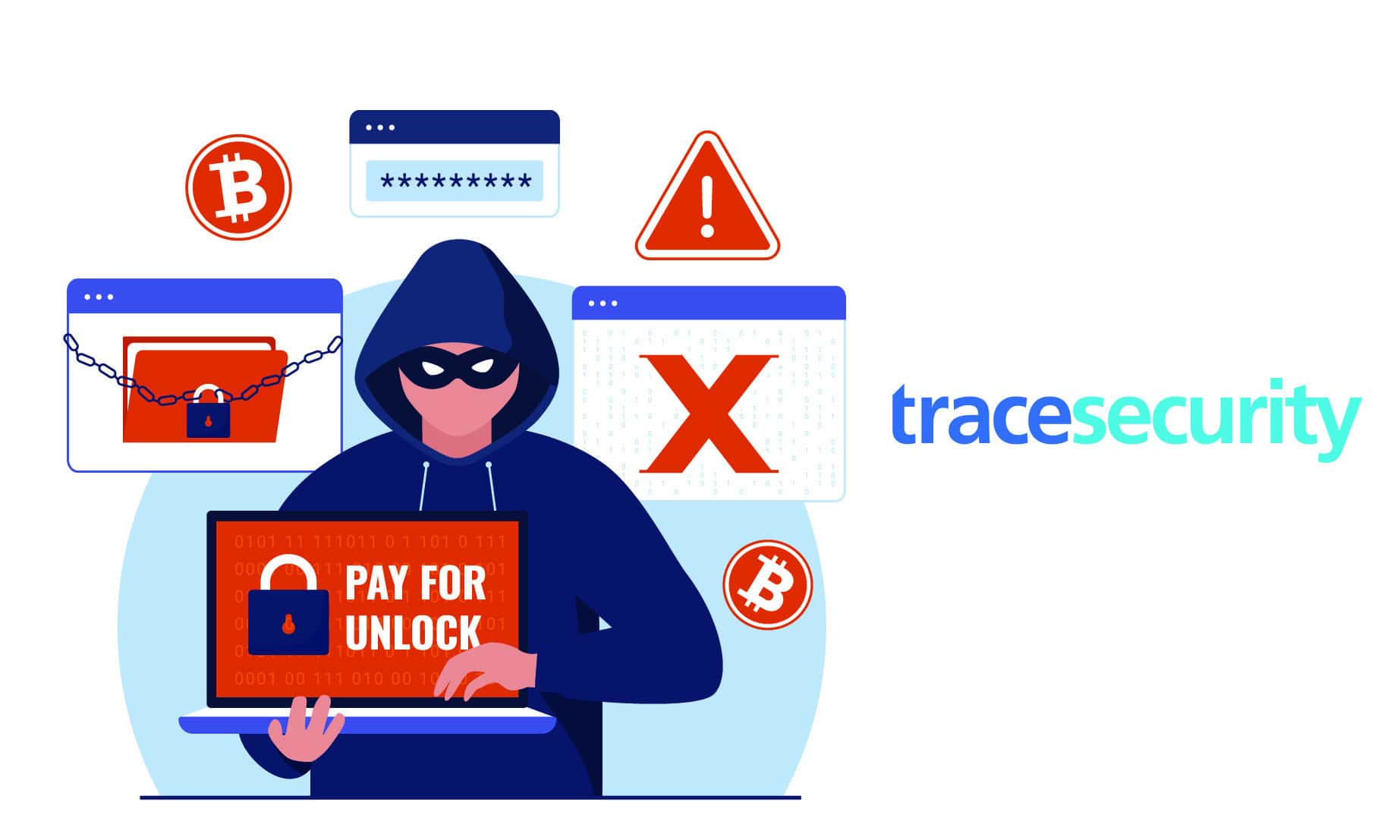
Make sure your organization is ready to fight against a ransomware attack. It can come from anywhere at anytime, so it’s a good idea to prepare for any situation.
To combat ransomware, TraceSecurity has developed three prescribed domains for ransomware preparedness: Prevention, Detection, and Response & Recovery.