Client Login
Select a platform below to log in

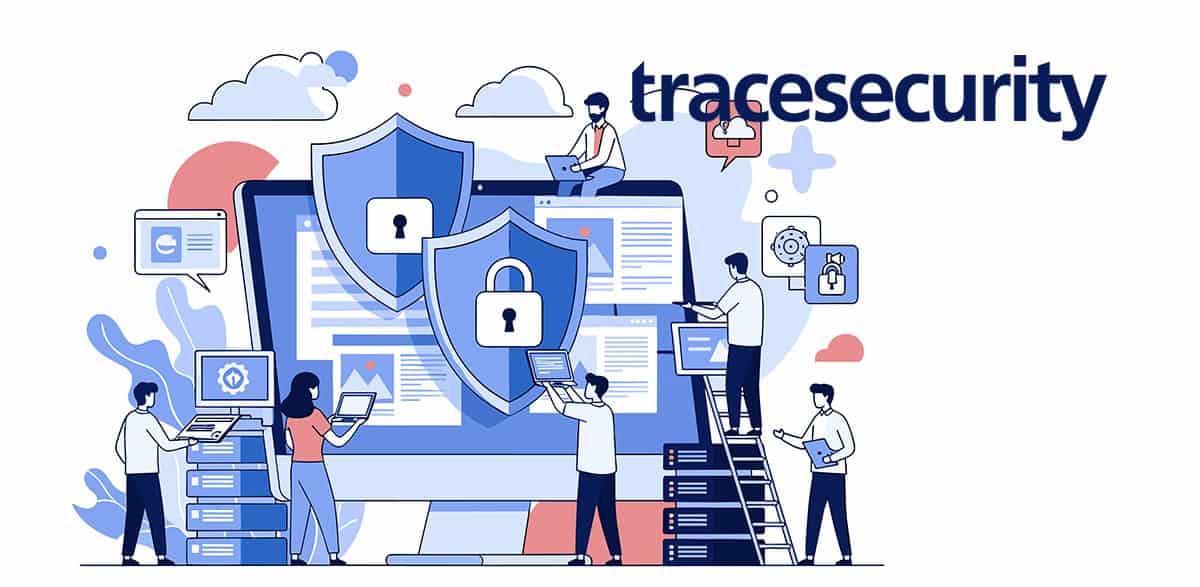
Cybersecurity in financial services continues to evolve rapidly. As we move into 2026, financial institutions face growing pressure from sophisticated cyber threats, expanding regulatory expectations, and increased reliance on third-party technology providers. Protecting customer data and ensuring operational resilience now requires more than compliance checklists; it requires a mature, risk-based security program.
Below are ten cybersecurity concepts every financial institution should understand and actively address in 2026.
Cybersecurity incidents directly affect business operations, customer trust, and regulatory standing. Boards and executive leadership are increasingly expected to treat cybersecurity as a core business risk, not just an IT concern. Effective programs align security strategy with institutional goals and risk tolerance.
How TraceSecurity helps: TraceSecurity supports leadership teams by translating technical risk into business-relevant insights through risk assessments and executive-level reporting.
The traditional network perimeter no longer exists. Zero Trust security models assume no user or system should be inherently trusted. Continuous verification, least-privilege access, and identity-centric controls are now baseline expectations across financial environments.
How TraceSecurity helps: TraceSecurity assists institutions in reviewing access control practices and identifying risks related to trust assumptions within their environments.
Compromised credentials remain one of the most common causes of breaches. Strong identity governance, including multi-factor authentication, role-based access, and lifecycle management, is essential for reducing exposure.
How TraceSecurity helps: TraceSecurity evaluates identity and access management controls to identify gaps that could lead to unauthorized access.
Financial institutions increasingly rely on vendors and service providers with access to systems or sensitive data. Regulators expect continuous oversight of vendor cybersecurity posture, not just one-time due diligence.
How TraceSecurity helps: TraceSecurity conducts third-party risk assessments and helps institutions strengthen vendor management programs.
Modern ransomware attacks often target backups, recovery processes, and business continuity capabilities. Institutions must be prepared to recover operations, not just restore data.
How TraceSecurity helps: TraceSecurity evaluates incident response and recovery readiness to help institutions withstand disruptive cyber events.
Written incident response plans are no longer sufficient. Institutions are expected to conduct tabletop exercises and validate decision-making, escalation paths, and communication procedures.
How TraceSecurity helps: TraceSecurity facilitates incident response tabletop exercises that help teams practice and improve real-world readiness.
Attackers are increasingly using AI to automate reconnaissance and create convincing phishing campaigns. At the same time, defenders use AI for detection and response. Governance around AI use is becoming essential.
How TraceSecurity helps: TraceSecurity helps institutions evaluate emerging risks associated with AI adoption and third-party AI tools.
Not all data carries the same risk. Clear data classification allows institutions to apply appropriate protections, improve access control decisions, and respond more effectively during incidents.
How TraceSecurity helps: TraceSecurity assesses data handling practices and helps align controls with data sensitivity.
Regulatory compliance is critical, but compliance does not automatically equate to strong security. Effective programs continuously adapt to evolving threats and operational realities.
How TraceSecurity helps: TraceSecurity provides risk-based assessments that go beyond checkbox compliance to focus on real-world exposure.
Employees remain a primary attack surface. Institutions with strong security awareness programs and engaged leadership experience fewer successful attacks.
How TraceSecurity helps: TraceSecurity supports security awareness initiatives and evaluates organizational security maturity.
In 2026, successful cybersecurity programs in financial institutions are proactive, risk-driven, and aligned with business objectives. Institutions that regularly assess their controls, test their response capabilities, and adapt to emerging threats are better positioned to protect their customers and maintain regulatory confidence. TraceSecurity works with financial institutions to strengthen cybersecurity programs through independent assessments, strategic guidance, and practical testing, helping organizations move from compliance to resilience.